
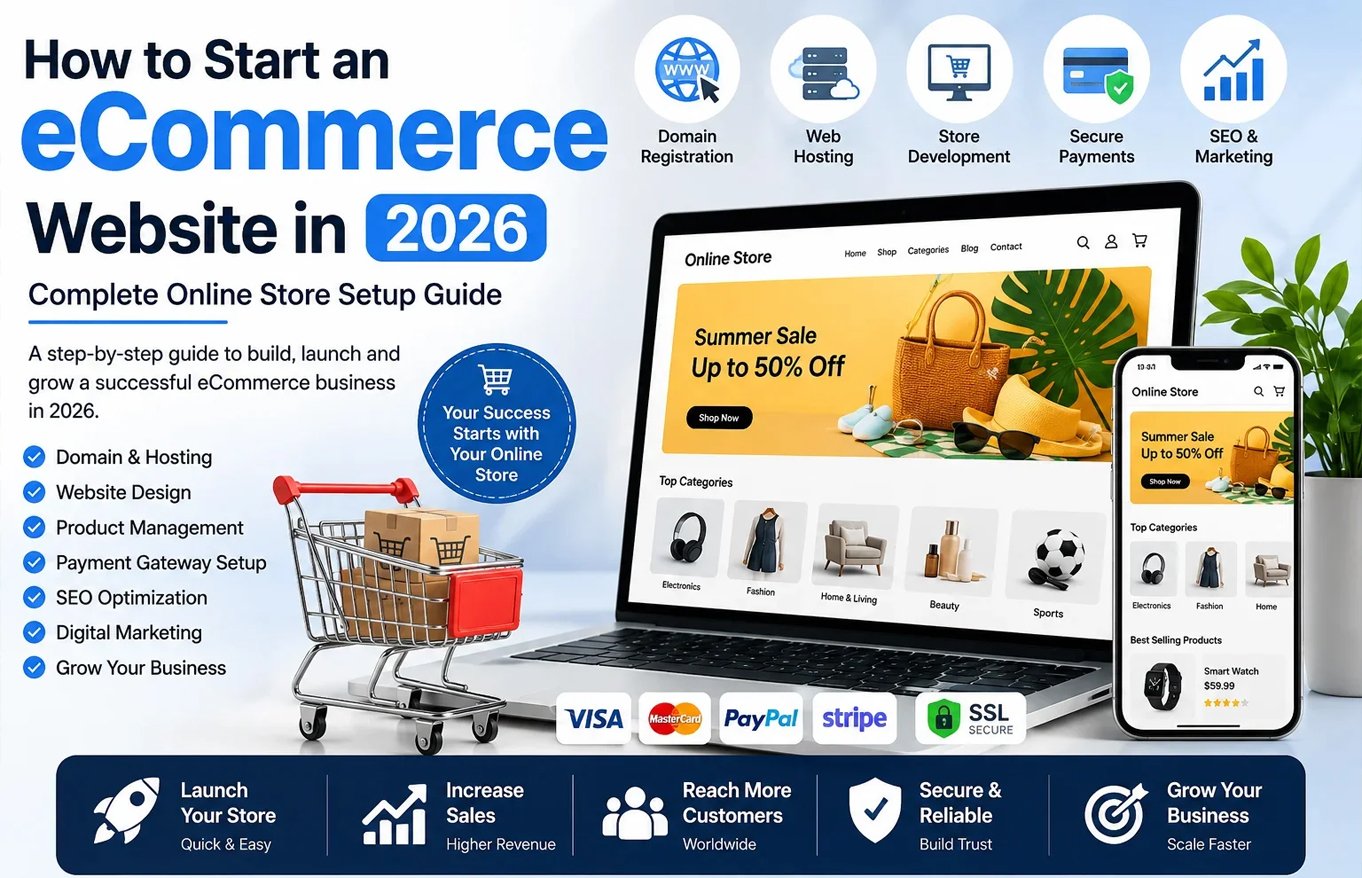
How to Start an eCommerce Website in 2026: Complete Step-by-Step Guide for Beginners
21. Use Google Ads to Drive Targeted Traffic
Google Ads is one of the fastest ways to attract potential customers to your eCommerce website. Unlike SEO, which can take months to generate results, Google Ads can start driving traffic immediately after launching a campaign.
Benefits of Google Ads for eCommerce
- Instant Website Traffic
- Highly Targeted Audience
- Product Shopping Ads
- Remarketing Opportunities
- Measurable Results
- Scalable Marketing Campaigns
Product Shopping Ads display images, prices, and product details directly in search results, increasing visibility and click-through rates.
Image Caption: Google Ads helps online stores attract qualified buyers and increase sales quickly.
22. Implement Affiliate Marketing
Affiliate marketing allows bloggers, influencers, and website owners to promote your products in exchange for a commission on successful sales.
Advantages of Affiliate Marketing
- Performance-Based Marketing
- Increased Brand Exposure
- Lower Marketing Risk
- Expanded Audience Reach
- Improved Search Visibility
Many successful online stores generate a significant percentage of their revenue through affiliate partnerships.
23. Master Conversion Rate Optimization (CRO)
Conversion Rate Optimization focuses on increasing the percentage of visitors who complete desired actions such as making a purchase or filling out a contact form.
Effective CRO Strategies
- Improve Product Images
- Use Strong Call-to-Action Buttons
- Display Customer Reviews
- Simplify Checkout Processes
- Reduce Form Fields
- Offer Free Shipping
- Create Urgency with Limited-Time Offers
Even small improvements in conversion rates can dramatically increase revenue without increasing advertising costs.

Image Caption: CRO techniques help maximize sales from existing website traffic.
24. Reduce Shopping Cart Abandonment
Shopping cart abandonment is one of the biggest challenges for eCommerce businesses. Many users add products to their cart but leave before completing a purchase.
Common Causes of Cart Abandonment
- Unexpected Shipping Costs
- Complicated Checkout Process
- Limited Payment Options
- Website Security Concerns
- Slow Website Performance
- Forced Account Creation
Solutions
- Offer Guest Checkout
- Show Shipping Costs Early
- Send Abandoned Cart Emails
- Provide Multiple Payment Methods
- Improve Website Speed
25. Track Website Performance with Analytics
Analytics tools provide valuable insights into visitor behavior, traffic sources, sales performance, and customer interactions.
Important Metrics to Monitor
- Website Traffic
- Bounce Rate
- Average Session Duration
- Conversion Rate
- Revenue
- Top-Selling Products
- Customer Acquisition Cost
Monitoring these metrics allows business owners to identify opportunities for improvement and growth.
Image Caption: Website analytics help businesses make informed marketing and sales decisions.
26. Improve Customer Retention
Acquiring new customers is important, but retaining existing customers is often more profitable. Loyal customers typically spend more and are more likely to recommend your business.
Customer Retention Strategies
- Loyalty Programs
- Personalized Email Campaigns
- Excellent Customer Service
- Exclusive Discounts
- Reward Programs
- Post-Purchase Follow-Ups
Strong customer relationships can create sustainable long-term business growth.
27. Use Artificial Intelligence in eCommerce
Artificial Intelligence is transforming the eCommerce industry by improving customer experiences and automating business processes.
AI Applications in eCommerce
- Product Recommendations
- Chatbots
- Customer Support Automation
- Inventory Forecasting
- Marketing Personalization
- Predictive Analytics
AI-powered tools can help online stores increase sales while reducing operational costs.

Image Caption: Artificial Intelligence helps online stores deliver personalized shopping experiences.
28. Build a Strong Brand Identity
A strong brand identity differentiates your online store from competitors and creates memorable customer experiences.
Elements of Branding
- Professional Logo
- Consistent Colors
- Unique Brand Voice
- Professional Website Design
- Quality Customer Service
- Consistent Messaging
Customers are more likely to trust and purchase from brands that appear professional and recognizable.
29. Scale Your eCommerce Business
Once your store starts generating consistent revenue, the next step is scaling operations to increase sales and profitability.
Ways to Scale
- Expand Product Lines
- Enter New Markets
- Increase Advertising Budgets
- Improve Customer Retention
- Automate Business Processes
- Partner with Influencers
- Launch International Shipping
Successful scaling requires careful planning and continuous optimization of operations and marketing efforts.
30. Common eCommerce Mistakes to Avoid
Many new store owners make avoidable mistakes that limit growth and profitability.
Common Mistakes
- Poor Website Design
- Ignoring SEO
- Slow Loading Speed
- Weak Product Descriptions
- Lack of Marketing Strategy
- Ignoring Mobile Users
- Poor Customer Service
- Not Tracking Analytics
- Complicated Checkout Process
- Insufficient Security Measures
Avoiding these mistakes can save time, money, and lost sales opportunities.
Image Caption: Understanding common mistakes helps online businesses achieve faster growth.
31. Future Trends in eCommerce for 2026 and Beyond
The eCommerce industry continues to evolve rapidly as new technologies and consumer behaviors emerge.
Important Trends
- Artificial Intelligence Integration
- Voice Commerce
- Augmented Reality Shopping
- Personalized Experiences
- Mobile Commerce Growth
- Social Commerce Expansion
- Sustainable Shopping Practices
- Faster Delivery Expectations
Businesses that adapt to emerging trends are more likely to remain competitive and profitable in the future.
32. Final Thoughts
Starting an eCommerce website in 2026 offers tremendous opportunities for entrepreneurs and businesses worldwide. Success requires a combination of strategic planning, professional website design, effective marketing, excellent customer service, and continuous optimization.
By selecting the right niche, building a user-friendly website, implementing SEO, leveraging digital marketing channels, and focusing on customer satisfaction, you can create a profitable online business that continues to grow year after year.
The most successful eCommerce businesses understand that growth is an ongoing process. Continuous testing, learning, and adapting to customer needs will help ensure long-term success in the competitive online marketplace.
Frequently Asked Questions (FAQs)
1. What is an eCommerce website?
An eCommerce website is an online platform that allows businesses to sell products or services directly to customers through the internet.
2. How much does it cost to start an eCommerce website?
Costs vary depending on your platform, hosting, domain name, design requirements, and marketing budget. Small stores can start with a modest investment and scale over time.
3. Which platform is best for eCommerce?
Popular platforms include WooCommerce, Shopify, Magento, and OpenCart. The best choice depends on your business goals and technical requirements.
4. Do I need a business license to sell online?
Requirements vary by country and location. Check local regulations before launching your online store.
5. How can I attract customers to my online store?
You can use SEO, Google Ads, social media marketing, email marketing, content marketing, and influencer partnerships.
6. Is SEO important for eCommerce websites?
Yes. SEO helps improve visibility in search engines and drives organic traffic to your store.
7. What payment methods should I offer?
Offer multiple options including credit cards, debit cards, PayPal, Apple Pay, Google Pay, and local payment gateways.
8. How can I improve conversion rates?
Use high-quality product images, customer reviews, fast website speed, secure checkout, and clear call-to-action buttons.
9. What is cart abandonment?
Cart abandonment occurs when shoppers add items to their cart but leave without completing the purchase.
10. Why is mobile optimization important?
Many customers shop using mobile devices. Mobile-friendly websites provide better user experiences and improve SEO performance.
11. How long does it take to build an eCommerce website?
Simple stores can be launched within days, while custom projects may require several weeks or months.
12. What products sell best online?
Popular categories include electronics, fashion, beauty products, home goods, fitness equipment, and digital products.
13. What is dropshipping?
Dropshipping is a business model where products are shipped directly from suppliers to customers without holding inventory.
14. Can I sell internationally?
Yes. Many eCommerce platforms support international shipping, currencies, and multilingual content.
15. What are the most important eCommerce metrics?
Traffic, conversion rate, average order value, customer lifetime value, and cart abandonment rate are key performance indicators.
2026 eCommerce Website Launch Checklist
- Choose a profitable niche
- Register a domain name
- Select reliable web hosting
- Install your eCommerce platform
- Create professional branding
- Design responsive website pages
- Add products and categories
- Configure payment gateways
- Set up shipping methods
- Install SSL security
- Create privacy policy and terms pages
- Optimize product pages for SEO
- Connect Google Analytics
- Connect Google Search Console
- Launch email marketing campaigns
- Set up social media profiles
- Test checkout functionality
- Review website speed
- Verify mobile responsiveness
- Launch marketing campaigns
Image Caption: Follow this checklist before launching your online store to maximize success.
Internal Linking Opportunities
To strengthen SEO performance, create internal links between related service pages and blog posts.
- Website Design Services
- Web Development Services
- Digital Marketing Services
- SEO Services
- Email Marketing Services
- Social Media Marketing Services
- Content Marketing Services
- Website Maintenance Services
Internal linking helps search engines understand website structure while improving user navigation.
Call to Action
Ready to launch your own eCommerce website?
A professionally designed online store can help you reach more customers, increase sales, and grow your business faster. Whether you are launching your first online store or upgrading an existing website, investing in professional eCommerce development can provide long-term benefits.
Contact our team today to discuss your project requirements and discover how we can help build a powerful, scalable, and SEO-friendly eCommerce website tailored to your business goals.

Image Caption: Professional eCommerce solutions help businesses succeed online.
Final Conclusion
Starting an eCommerce website in 2026 offers enormous opportunities for entrepreneurs, startups, and established businesses. With the right platform, professional website design, effective SEO strategy, and ongoing digital marketing efforts, businesses can successfully compete in the growing online marketplace.
Success does not happen overnight. Focus on creating an excellent customer experience, continuously improving your website, and adapting to changing market trends. By following the strategies outlined in this guide, you will be well-positioned to build a profitable and sustainable eCommerce business.